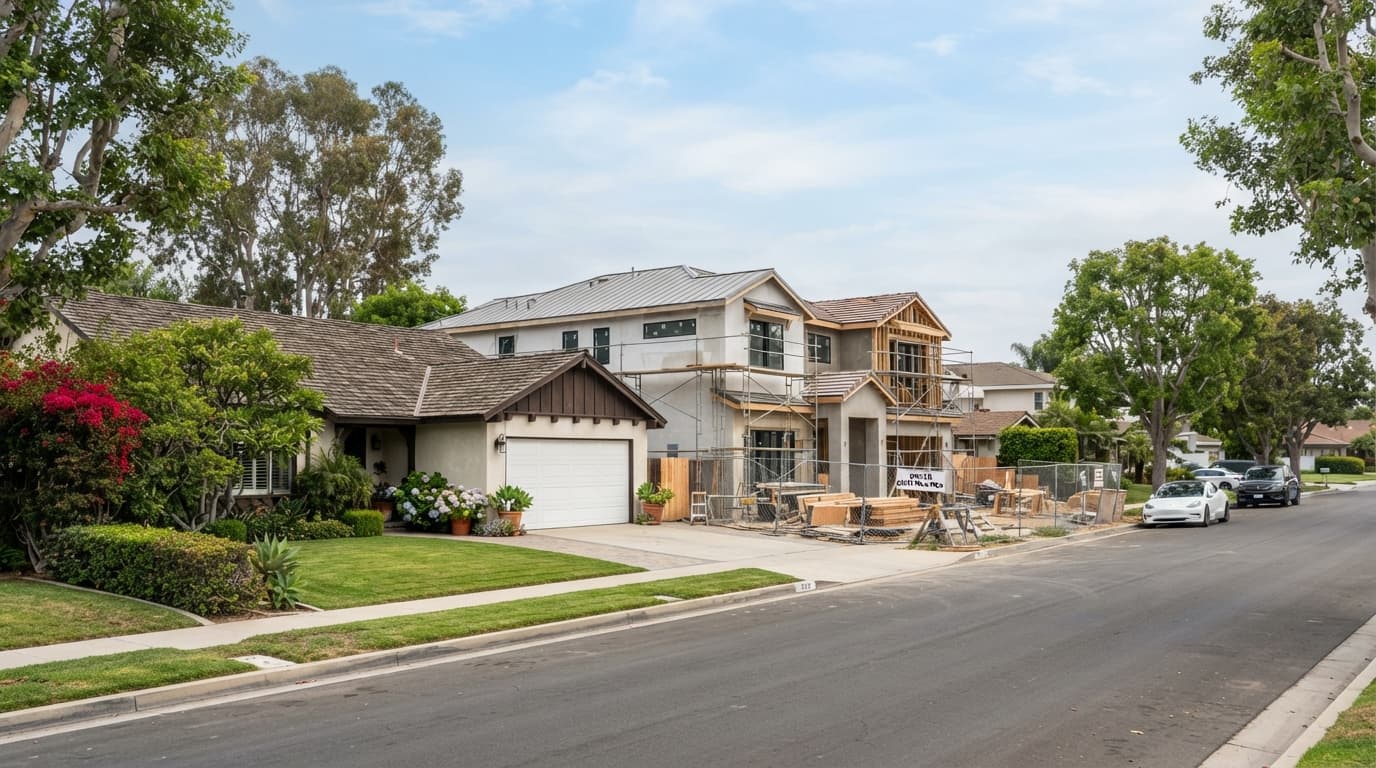
Pre-Approval Essentials for Fountain Valley Sellers Transitioning to Move-Up Homes (Century Funding Analysis)
By Diem Vuong Nguyen · DRE #02231713
Selling a Fountain Valley home and buying your next one? Learn how to coordinate pre-approval, equity, and timing so your move-up goes smoothly.
Moving up is a two-sided transaction. You are selling one home while buying another, and the timing, financing, and risk all need to align. For Fountain Valley homeowners, who often hold significant equity, a well-planned pre-approval is the foundation of a smooth transition.
Start with your equity
Your equity is the difference between your home's market value and what you owe. After subtracting selling costs, it becomes the main source of your next down payment. Ask for a market analysis to estimate your likely sale price, then subtract your loan payoff, commissions, closing costs, and any repairs or credits to see net proceeds.
Why pre-approval is different for move-up buyers
Your lender will look at your current mortgage, your income, your assets, and how the sale and purchase interact. Key questions include:
- Will you qualify for the new loan while still owning the current home?
- Will you count on sale proceeds for the down payment?
- Can you carry two mortgages temporarily if the timing overlaps?
- How will the current mortgage affect your debt-to-income ratio?
An experienced loan officer can structure the approval around your plan.
Choose a sequencing strategy
Sell first, then buy. This approach clarifies your budget and reduces financial risk, but you may need temporary housing, and you will be shopping without a home to fall back on.
Buy first, then sell. You can shop with less pressure, but you may carry two payments and need strong reserves or qualifying income.
Coordinate closings. With careful scheduling, both transactions close within a short window. This depends on cooperative parties and leaves less room for delays.
Use contingencies or bridge options. A sale contingency can protect you but may weaken your offer. Short-term bridge financing may help in some cases, though it carries costs.
Prepare your documents
Plan to provide recent pay stubs, tax returns, bank and investment statements, your current mortgage statement, and details on the home you are selling. If you are self-employed or have variable income, expect more documentation.
Avoid financing mistakes
- Do not make large purchases or open new credit before closing
- Avoid moving money without a paper trail
- Do not assume sale proceeds will arrive on a specific day; build in a cushion
- Keep your lender updated if circumstances change
- Review the loan estimate carefully and compare it with other offers
Think about the mortgage you are leaving
If your current loan has a low interest rate, giving it up is a real cost. Compare the new payment, taxes, and overall cost with your current situation. Portability is rare, but you can sometimes keep the old home as a rental if your finances support it. Discuss the tax and landlord implications before deciding.
Property tax implications
California property tax is generally reassessed at purchase price when you buy, so your next home's taxes may be higher than your current ones. Homeowners who are 55 or older or who meet other qualifications may have options to transfer their tax base under Prop 19, subject to conditions. Confirm eligibility with a tax advisor.
A note on affiliated services
Century Funding is an affiliated lending resource. You are never required to use it, and you should compare lenders before you commit.
Questions to ask your loan officer
Bring specific questions to your first meeting. How much can I borrow if my current home has not yet sold? Will the lender count rental income if I keep the home? What documentation proves my sale contract when I make an offer? How do you handle appraisal gaps on the new home? What are the options if my sale closes later than planned? Written answers help you design an offer that sellers will trust, and they reveal where your plan carries risk. A thoughtful lender will help you model several outcomes so no single delay derails your move.
Coordinate your agents and timelines
Ask both sides of your transaction to share timelines early. Escrow officers, lenders, and agents can coordinate closing dates and possession terms, including short rent-backs that let you stay in your current home after closing. A rent-back can be an elegant bridge, giving you time to move without carrying two homes. Document the terms clearly, including deposits, insurance, and condition at handover.
Plan your move
Use our free calculator to estimate net proceeds and your next purchase budget, then schedule a conversation about timing and strategy.
This article is educational and not a loan offer, commitment to lend, or tax advice. Loans are subject to credit approval and program terms.
- #move-up buyer
- #pre-approval
- #Fountain Valley
- #selling and buying
- #Century Funding
Need a Strategy Tailored to Your Property?
Educational content only. Request a private consultation with Ivy to discuss your own property and timing.
Try the Free Move-Up Calculator Explore Ivy's servicesIvy (Diem Vuong) Nguyen · California DRE #02231713